
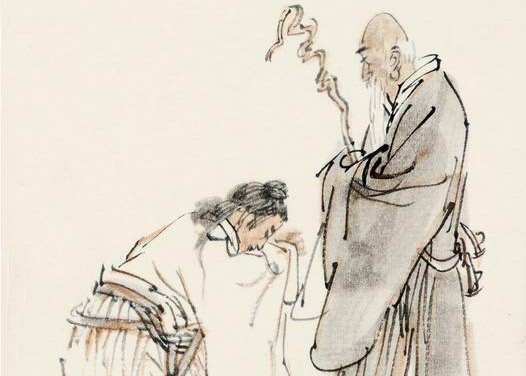
ON THE SUBJECT OF DISCIPLESHIP
In August, I spoke to a group, sharing some aspects that I believe are fundamental to understanding the basic culture of martial arts.
I was pleased to see that some people reposted my comment in various forms.
In these few lines, I will try to clarify some delicate aspects related to the discipleship ceremony and the meaning of the term Shi Fu.
I hope it will be helpful.
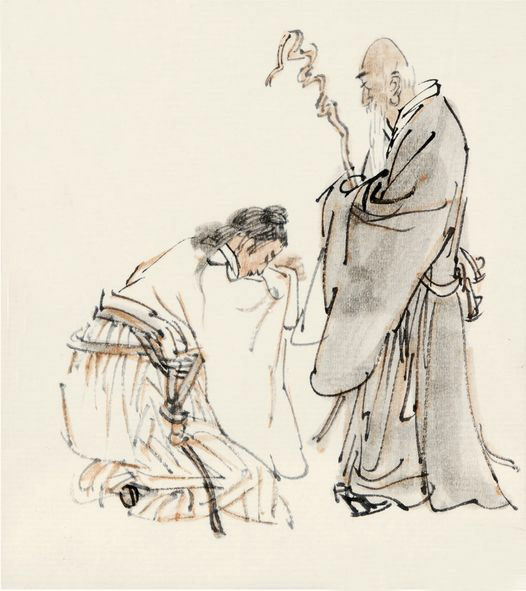
This is certainly a very sensitive issue. Both in China and in the West, traditions have undergone countless transformations for different reasons: social, historical, political, and economic. Reading the comments, two issues emerged: the value of the epithet Shi Fu and the meaning of the 拜师 Bai Shi ceremony. (I always recommend pronouncing Bai Shi very carefully because if pronounced incorrectly, it can be confused with “white poop”). From north to south, especially before the Cultural Revolution and the establishment of the People's Republic of China, there were more than a hundred different ethnic groups (only 56 are officially recognized by the current Chinese government). In many cases, we are talking about completely different languages, customs, and traditions.
It cannot be ignored that many of the so-called Chinese traditions are reinterpretations of concepts extrapolated from the different cultures present in China and collected in a single container that we now identify as Chinese culture. All this happened in less than 90 years. Therefore, it is inevitable that even in martial arts there are countless reinterpretations of the function of certain rituals and the meaning of terms. In my experience, the value of the discipleship ceremony varies enormously from one community to another.
I have met very elderly masters who totally rejected the ceremonial logic of discipleship, others who considered it indispensable, and still others who proposed performing the ceremony after dinner. Today, some terms that once had emotional value and carried enormous responsibility have taken on new meanings. This is all legitimate, as languages and cultures are constantly changing. However, my concern arises when emotional charge is used to exert psychological leverage and act out of convenience. Calling a stranger “Father” or establishing a family relationship implies responsibility on both sides. If, on the other hand, this supposed family relationship is used to activate control mechanisms or marketing strategies, then we are certainly moving away from the concept of family and entering into that of psychological manipulation, branding, and strategic communication.
Today, the term Shi Fu is often used as a rank to describe a level and certification. Again, this is perfectly acceptable, as everything can be transformed. However, in traditional circles in China, if you call a Master 師父 Shi Fu without being his disciple, you will immediately be reprimanded. Only disciples can call a Master 師父 Shi Fu; all other students must address him as 老师 Lao Shi (Teacher) or 大师 Da Shi (Grand Master if you want to be particularly respectful or if you are already personally recognized as a Master). It is a term that defines a specific relationship, not a rank. Especially in the Canton and Hong Kong areas, however, the term 師傅 Shi Fu is commonly used to define an experienced individual. When asking a taxi driver, traffic cop, or sanitation worker for directions, you address them with this term Shi Fu. The same applies to martial arts teachers or teachers of other disciplines. In this case, it has no familial connotation. The term 師父 Shi Fu, on the other hand, refers to a family relationship (父母 Shi Mu indicates parents, 父 Father 母 Mother). Theoretically, through the discipleship ceremony, one became part of a traditional lineage that passed down a mandate of responsibility, a specific mission, from generation to generation.
Today, in modern language, 師傅 Shi Fu and 師父 Shi Fu are often used as synonyms without any particular differences. This has caused further confusion in the use of the term Shi Fu in the West.
However, becoming a disciple of a Master does not create a relationship of total exclusivity. Traditionally, there is the concept of 客家弟子 Ke Jia Di Zi, guest disciple. In some cases, Master Fathers sent their students to study certain aspects of other disciplines with other Masters. In this case, the “friend” Master welcomed the external Disciple to instruct him on specific topics for which the original Shi Fu considered him to be more expert.
In any case, in China, many Masters have no problem with their disciples also being disciples of masters of other disciplines. After all, the claim to omniscience is not befitting of any true Master.